CONTEST
Contest Overview
Unlike conventional competitions that judge only finished works, we aim to be a "living theater of creativity (Living Lab)" that evaluates the "process of evolution."
THEME
Theme
Main theme: "Family"
How do you define family? The interpretation is up to you. Leave fixed ideas behind and express "family" from your own point of view.
* Entries do not have to take "family" itself as their motif. We also welcome entries on freely chosen themes that take "family" as a starting point and put it in a wider perspective.
Sub-theme: "Can AI Truly Love? (Is There Love in AI?)"
Today's creators live in an age of creating alongside an unknown partner: AI. "AI can pretend to have love."
AI imitates human emotion from vast amounts of past data, and at times speaks of love in ways that move the heart. Can it become our partner (AIBO)? Or will it become a threat? Through your work, offer your own answer to this question.
DIVISIONS
Divisions
 01
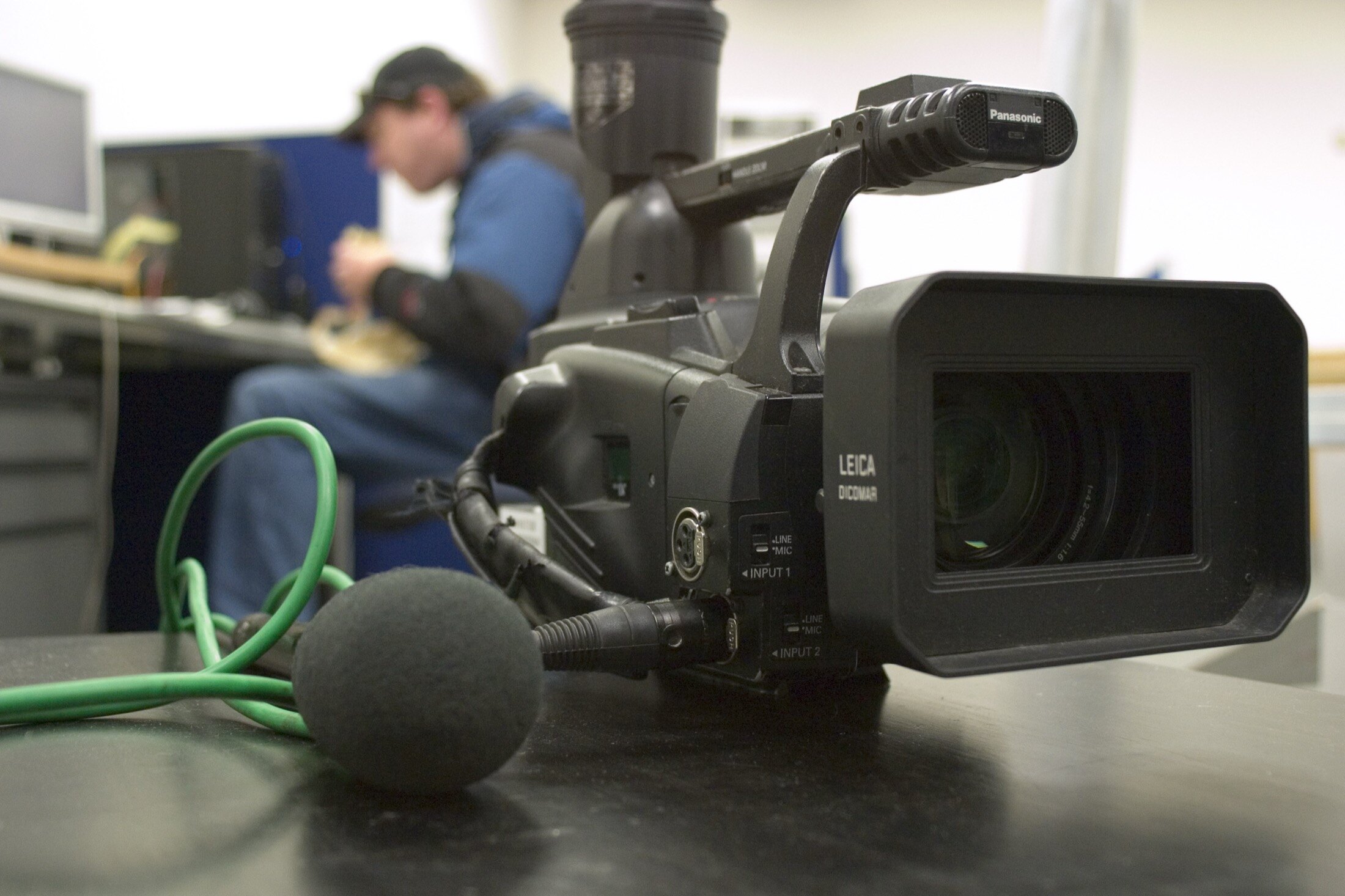
01Video / Film Division
FILM / VIDEO
- Eligible works
- Video, live action, animation, photographs, illustrations, etc., edited and composed into an unpublished film work.
- Format
- Any format or technique, such as a short film, concept video or short movie.
- Length (running time)
- The finished work should be about 1 to 6 minutes long.* For longer works that exceed the set time, an "edited short version (digest version)" with a note explaining this may be submitted as the entry.
 02
02Music & Sound Division
MUSIC
- Eligible works
- Instrumental performance, singing or the human voice, and various sounds (natural sounds, artificial sounds, etc.) composed into an unpublished music or sound work (composition).
- What to submit
- As a rule, submit the score (scores made with notation software are also accepted) used for performance and reproduction.
- Instrumentation and genre
- There are no limits on musical genre or style, and crossovers (mixes) of different genres are allowed. Any instrumentation is allowed, including orchestra, chamber music, solo instrument, band, ensemble and other groups. You are free to choose the instruments and sound sources you use (Western instruments, Japanese traditional instruments, folk instruments, period instruments, electronic instruments, Vocaloid, and other tools or actions that produce sound or vibration in the audible range, etc.).
- Length (running time)
- The finished work should be about 1 to 4 minutes long.* For longer works that exceed the set time, an "edited short version" with a note explaining this may be submitted as the entry.
 03
03Idea & Concept Division
IDEA
- Eligible works
- In other fields not covered by the Video / Film Division or Music & Sound Division (games, apps, electronics, manga, dance, performance, fashion, food and dining, effective use of information and knowledge, etc.), an unpublished idea with originality, usefulness and potential for business development.
- Submission and presentation format
- Submit an outline of the idea (a text of about 500 characters, figures or drawings, or an explainer video presented by the entrant, a narrator, an AI avatar, etc. [video length follows the Video / Film Division rules]).
Rules on Number of Entries and Eligibility
- Entry limit
- Video / Film Division and Music & Sound Division: Whether an individual or an organization, up to one work per person (one group) in each division.
Idea & Concept Division: Up to three works per person (one group) may be entered, only if the works are in different genres. - Groups and collaborations
- For joint works (groups or organizations), if the main members are different, each is accepted as a "separate group" and may enter. This rule also applies in the same way to works made in collaboration with other creators.
Collaboration across genres is one of the key pillars of KCP. The "KCP Collaboration" section just below explains in detail the thinking behind our recommendation and how the "theater-style contest" works.
COLLABORATION
KCP Collaboration
KCP is not just a contest where individuals compete on how polished their works are. We encourage a "theater-style contest" in which Forum participants (creators, Sponsors, organizers, etc.) work together to upgrade the works.
Modifying or expanding a work after submission, based on feedback, additional material or suggestions from a different perspective from the organizers or other participants, is one recommended form of collaboration. Collaboration is recommended, not required. Entries completed individually are evaluated in the same way.
Overview of KCP Collaboration
The appeal of collaboration between different genres, such as film and music, is that each form of expression complements the other and can create a new world view. What makes KCP notably unique is that the contest and collaboration run at the same time.
How a collaboration project comes together
- 1. As a rule, proposals, offers and negotiation of terms for a collaboration take place between creators who have submitted entries in each field.
- 2. Consultations and approaches about matching take place after information is exchanged on the Forum and elsewhere, with the KCP Operations Secretariat coordinating.
- 3. Whether to accept, decline or discuss a collaboration is left to the individual creators' own judgment.
Eligibility of participants (entries and collaborations)
No restrictions. Open to all individuals, groups and organizations, professional or amateur, who can submit a work.
KCP itself is promoted from its base in Kagoshima to the whole world. The Prototype places its focus on Kagoshima.
The role of the KCP Operations Secretariat is to take outstanding works from each division through business-level collaboration with products and companies, until they reach their "expected form."
EVALUATION
Judging and Mentoring System: Evaluation Through Co-creation
KCP prototype 2026 does not use the conventional system in which works compete for rank in a closed jury room. Instead, we aim for open judging as a "Living Lab (a living proving ground)," where diverse perspectives meet and works are refined through dialogue.
We use "Open Platform Judging," in which Supporters, creators, Sponsors, AI and the KCF Executive Committee each take part in their own role, and works are evaluated as a whole, together with the perspective of Advisors who oversee the entire process.
Roles of the different participants in judging
-
01
Supporters, Creators and Sponsors
Through votes, surveys and feedback, they measure how strongly a work resonates with people and what impact it has on society and business.
-
02
AI
Analyzes the novelty and structural features of expression from data, and presents them as supporting indicators that are not biased by personal opinion or genre.
-
03
KCF Executive Committee
Brings together the community's enthusiasm and the AI analysis, and makes an overall judgment in light of the principles of creativity, diversity and circulation, and of the work's wider social impact.
-
04
Advisors
Not authorities who give scores. From a position independent of any conflict of interest, the Advisors oversee the whole judging process and serve as a "third eye," watching that it does not stray from the essence of creativity.
Why we have "no experts"
To evaluate works that assume a mix of genres on a level field, without forcing them into existing frameworks, we do not appoint specialist judges tied to a particular genre. We respect the strength that comes from exploring one field in depth, while evaluating the change that comes from encounters with other fields and with AI.
The role and limits of AI
- Pattern recognition vs. creative leaps: AI analysis identifies trends and features based on past data. It cannot put a number on all of the unpredictable associations people make or the flashes of insight that go beyond context.
- Subjectivity in aesthetic judgment: What we feel is beautiful or new changes with the times and with culture. Artistic value is never decided by AI indicators alone.
- Hallucination and bias: We assume that reference data can be biased and that generated information can be wrong. For this reason, AI is positioned not as a sole judge but as an analyst that supports multiple perspectives.
We evaluate the process of evolution, not only the finished work
We also value "the process itself," in which works change through votes, surveys and discussion on the Forum. Making public the process in which objective AI analysis, community enthusiasm and the Executive Committee's judgment make up for each other's limits is also a key experimental theme of Prototype 2026.
AI POLICY
KCP (Kagoshima Creative Platform) AI Usage Guidelines
Reference translation — the Japanese version is the official text. Japanese version (official text)
KCP aims to create a new cultural economic sphere where technology and human creativity collaborate. These guidelines serve as a framework for building an environment where creators can take on challenges with confidence and where diverse forms of expression are evaluated fairly.
1. KCP’s Stance on AI (Roles and Limitations)
At KCP, we position AI not as an "absolute judge" that determines success or value, but as an "analytical partner" that illuminates human creativity from multiple perspectives.
(1) Distinction between pattern recognition and creative leaps:
AI-driven analysis and scoring are based on pattern analysis of characteristics and composition derived from existing data. AI cannot quantify the entirety of human traits—such as unpredictable associations, emotional flashes of inspiration, and the reinterpretation of context across boundaries.
(2) Subjectivity and diversity in aesthetic evaluation:
Definitions of "beauty" and "novelty" are constantly shifting based on era, culture, and individual sensibilities. We do not determine a work's artistic value solely based on AI-calculated metrics regarding formal beauty or compositional logic.
(3) Acknowledging hallucinations and bias:
Recognizing the potential for bias in training data and AI-specific errors (hallucinations), we do not rely on AI for judging in isolation. Instead, we employ an "Open Platform Judging" system where three elements—objective AI analysis, the enthusiasm of the supporter community, and the philosophical judgment of the executive committee—complement each other's limitations.
(4) Evaluating the process (evolution):
KCP values not only the finished work but also the "process of co-creation" itself—where the work evolves through dialogue in voting, surveys, and forums.
2. Submission Rules and Ensuring Rights & Transparency (AI Policy)
(1) Obligation to Declare AI Usage (Process Transparency)
- Mandatory Declaration: If generative AI tools (for images, video, music, text, code, etc.) are used during the production process, applicants must declare the "names of the tools used" and the "extent and role of AI utilization within the overall production" at the time of submission.
- Ensuring Fairness: The mere fact that AI was used, or the extent of its usage, will not result in a direct disadvantage during scoring. Evaluations will be conducted based on appropriate criteria while maintaining transparency.
(2) Protection and Management of Copyrights and Legal Rights
- Prohibition of Rights Infringement: Submissions containing AI-generated content that infringes upon the copyrights, trademark rights, or publicity rights of others are strictly prohibited. AI-generated works that intentionally mimic existing works will be excluded from judging.
- Verification of Training Data and Licenses: Applicants are responsible for verifying that the AI tools used do not unfairly infringe upon third-party rights and that the licenses permit commercial use and submission to this contest.
- KCP Support: The KCP Secretariat will serve as the point of contact and take responsibility for addressing any questions or issues regarding rights and license management.
3. Guidelines for Creators (Questions to Consider During Production)
KCP deeply explores the value of human creativity in the age of AI. Please keep the following questions in mind when creating your work:
(1) Challenging Originality (Sensitivity and Leaps of Thought):
The process of starting with a "unique sense of unease or emotional resonance (sensitivity)," moving through "unknown ideas (leaps of association)," and finally "realizing the work" represents the essential human creativity that AI cannot replicate. Use the average solutions presented by AI as a stimulus or a springboard, and aim for a creative realm that only you can express.
(2) Collaboration as Complementary Partners:
Do not use AI merely as a tool to save effort; instead, utilize it as a dialogue partner to bounce ideas off of. The unexpected "chemical reactions" born from interacting with AI are the key to creating unprecedented forms of expression.
(3) Information Verification and Ethical Guardrails:
AI-generated information and materials may contain hallucinations (factual errors). Creators are responsible for distinguishing between facts and truth. Furthermore, we require that work be produced with constant awareness of appropriate ethical guardrails to eliminate discriminatory or violent expressions, hate speech, and unjust biases.
4. Guideline Implementation and Revision
These guidelines will be flexibly revised and updated in response to technological advancements, the formation of social consensus, and changes in legal frameworks, based on advice from the KCF Executive Committee, experts, and advisors.
This agreement shall be governed by and construed in accordance with the laws of Japan. In the event of any discrepancy between the Japanese version and the English version, the Japanese version shall prevail.
(Supplementary Provisions)
Date of Enactment: October 1, 2026
APPLY
Entry and Schedule
- Entry period
- October 1 – December 20, 2026
- Judging period
- November 1 – December 31, 2026
- Interim announcement
- Early December 2026 (planned)
- Results announcement
- Mid-January 2027 (planned)
- What to submit
- Work data (MP4, PDF or another format suited to the division)
- How to submit
- Complete Supporter Registration, then upload your work file through the dedicated entry form
- Publication
- After review by the Secretariat, works are published in stages on the official YouTube channel and on the Works page
- Detailed rules
- For each division's eligible works, submission items, length and number of entries, see "Divisions" above. The conditions of entry are set out in the Submission Terms.
This English page is for reference. Entries, registration and forum posts are accepted in Japanese, and the Japanese terms and conditions are the official version.